Saturday, March 14, 2009

Understanding Poverty (a paper I wrote)

A Framework for Understanding Poverty and Its Impact on Educational Events

Over the past several years I have had numerous conversations with friends, family members, and other individuals—about the topic of poverty and its impact on a person. I have always argued that poverty was not something that a person just decided they would throw off and move away from. It is not like an annoying friend that your mother forced you to play with when you were a child, and now that you are older you have decided to avoid. Many times during these discussions I have tried to articulate this point, but have not had the proper language or facts to back up my opinions. For this assignment, I wanted to look deeper into the topic of poverty and its impact on an individual. I chose to read the book, A Framework for Understanding Poverty by Dr. Ruby K. Payne. In this book, she outlines how and why poverty has an incredible impact on a person’s education experience, and why poverty is not something we just walk away from.

The main argument I hear over and over again about people in poverty, is that they are impoverished because they have not tried hard enough to change their situation; they just make bad choices with their money, or they just don’t care. Basically, if they pulled themselves up by their bootstraps, they would be able to pull themselves out of their impoverished state. When we talk about poverty this way we make the assumption that poverty is solely an economic state that can be resolved through working harder and getting a better job. Dr. Payne would argue that a person’s ability to move from poverty to the middle class, depends more on the other resources a person has (Ruby, 1998). She would define poverty differently; her definition does not revolve around a lack of financial resources, although that is included (Ruby, 1998). Payne would argue that poverty is a lack of a combination of the following resources: financial, emotional, mental, spiritual, physical, support systems, relationship/role models, and knowledge of hidden rules (Ruby, 1998). Some individuals may have a shortage in a few or all of these areas, which keeps them in poverty.

I feel this distinction is an important one for educators to make. For many educators and individuals who come from middle class families, we carry with us our cultural assumptions about poverty. I have briefly lived in what is defined as situational poverty; this type of poverty is defined as poverty that is caused by some sort of event (Ruby, 1998). For a time when I was a young child, my parents were struggling to make ends meet and were living off of government assistance. After a couple of years my father completed a night school program, which allowed him to improve his employment situation. After this my mother went back to school and finished her college degree, which also helped her improve her employment situation. My father came from a family that walked a fine line between the middle class and poverty, but would probably be considered middle class. My mother came from an upper middle class family. So although for a time they were struggling to support themselves, they had access to many of the resources needed to move out of poverty. They were able to utilize these resources so our time living under the poverty line was limited. I have never experienced what Payne would define as generational poverty—a family unit that has been in poverty for two or more generations (Ruby, 1998).

Even though my personal experience with poverty is limited, it has had a profound impact on my thoughts toward the subject. My parents would not have been able to change their economic state without utilizing the many other resources that they had available to them. Even before reading A Framework for Understanding Poverty, I understood that my parents were fortunate to have the resources to help them make this move; but after reading Dr. Payne’s work I had the words to articulate what had happened. I believe my parents’ experience highlights four of the resources needed to move from poverty to the middle class. The first two of these resources are emotional support, and a strong support system. My parents were able to support each other, and they had friends and family that lived nearby. These friends and family were able to help watch my sister and I, provide hand-me-downs, and encourage them as they made sacrifices to move forward. One of these sacrifices came in the form of personal relationships. My parents did not see each other a lot during those years my dad would come home and my mom was off to school. Dr. Payne makes the point numerous times that in order to move from poverty to the middle class, or from the middle class to the wealthy, an individual often has to sacrifice personal relationships (Ruby, 1998). In generational poverty relationships are highly valued, and this makes the move from poverty to middle class difficult (Ruby, 1998).

The other two resources my parents had are also closely tied together as well. First, my parents had knowledge of the hidden rules of the middle class. Secondly, they had role models and relationships within the middle class. An example of one of these hidden rules is that in the middle class we see money as something we manage; while in poverty money seen as something you spend (amongst the wealthy money is invested) (Ruby, 1998). Because my parents had both grown up in middle class families, they understood this concept and knew this rule. Now this alone did not make their transition possible, but it was to their advantage. If my parents had been in generational poverty, relationships with individuals in the middle class would have been vital for the acquisition of the hidden rules of the middle class (Ruby, 1998). Even though my parents knew the rules, they did need these middle class relationships as they supplied them with resources. There were a number of times where my mother’s parents helped my parents. Whether it was helping pay for groceries or helping fix the car—my parents had help. This resource in family members is probably not something someone in generational poverty will have available.

Poverty has a profound impact on the educational setting; and it is important for educators to be conscious of the difficulties children from poverty will face. One of the biggest barriers that many students from poverty face is language difficulties (Ruby, 1998). In an education and work setting we use formal register, while most individuals in generational poverty only use casual register (Ruby, 1998). Register can be described as the style in which language is used. When children from poverty use casual register in a school setting—their work is perceived as poor, and this impacts their grade. When children are unable to participate using the correct register, they have difficulty finding academic success (Ruby, 1998).

Reacting to discipline can be another area where children from poverty can struggle (Ruby, 1998). Dr. Payne describes a patter of discipline in which a child makes a mistake, is belittled by their parent and then is feed by that parent (Ruby, 1998). This leads to the child using the child voice where they become defensive and withdrawn (Ruby, 1998). The parent voice is authoritative and judgmental; it doesn’t give the child choices and presents a situation where the child must follow directions or face the consequences (Ruby, 1998). The adult voice is the key to disciplining children from poverty (Ruby, 1998). The adult voice gives a child choices, is non- judgmental, and avoids being negative (Ruby, 1998). Many children from poverty don’t even realize they have other options, and working with them using the adult voice allows them to discover other options and problem solve difficult social situations (Ruby, 1998).

Another reason children from poverty have trouble in a school setting is because they do not have the support system to help them achieve academic success (Ruby, 1998). If a child’s parents are working two jobs, or are in and out of jail—they may not be able to get the help they need with assignments. In addition, many children in poverty are forced to take on adult responsibilities at a young age, and as a result have less time for schoolwork (Ruby, 1998). Or in some cases a parent may have difficulty reading, or struggle with high-level math or science, making it difficult for them to help with assignments. Flexibility is often needed in these situations, and many schools have started to implement a school-wide support system that helps children in many of these difficult situations (Ruby, 1998).

The list of difficulties that many children from poverty will face in school is a long list. We as educators need to be very intentional about our interactions with these children and their parents. I grew up in a middle class family; and I am confident that the majority of educators also grew up in middle class families. This means that we bring many middle class assumptions into our interactions with our students, and their parents from poverty. If we are not intentional about our actions, we will have difficulty helping these students have academic success; academic success that could possibly help them move from poverty to middle class.


References

Ruby, P. K. (1998). A framework for understanding poverty (Rev. ed.). Baytown, Texas: RFT Publishing Co.

Labels: , ,

Tuesday, February 13, 2007

Racial Prejudice

Written 9/2/06

I was waiting in line at the post office. I was second or third in line. There were two clerks helping out, one was helping a lady send something to an international destination. The other was helping a lady with her and her husbands P.O. Box. Apparently the two are separated and are trying to switch the name the P.O. Box was under so it is under her name and not his.

Because her husband was not there and she did not have matching ID's there was nothing the post office could do. The clerk attending to her was doing a great job explaining why it was a security issue that they could not switch the Box over without her husband present. She was doing her best to figure out a way to help her but it just didn't seem like it was going to work. The lady trying to get the box changed was getting more and more frustrated and starting to get a little rude with the clerk.

So this is the point were I guess I will relate my story to the Title of my blog. The lady trying to change the P.O. Box was a larger African American woman, with a number of piercings on her face. Everyone else in the place was white.

Written 2/13/07 as best as I could remember...
This is were things got really interesting, it seemed to me that all these racial stereotypes started to kick in. The manager took over at this point and was so rude with this woman. The people in line started to role their eyes and the mood became very uncomfortable. It was almost like they were thinking, "Well what do you expect." Then the woman started to act like there was a great offense being perpetrated against her like somehow the clerk was doing something wrong by not letting her switch the P.O Box.

In the end the lady left cursing and very upset. The manager made some comment about how unbelievable that was, and I sat there and thought... I would never assume I was being persecuted if a clerk couldn't help me. I have never had a manager yell at me. Both of these women and a couple of people in line just seemed to feed off each other’s disdain for each other. It was very sad...
Godspeed,
Caleb

Labels: ,

Saturday, March 18, 2006

Race and Housing

Music: Nirvana, Foo Fighters, Weezer, Wallflowers, The Shins, Smashing Pumpkins, Coldplay, The Pixies, Violent Femmes, and lots of White Stripes.

So this is a little break from my homework. No really I have gotten a lot done today no really, all right who am I kidding…

Anyway like two weeks ago at the Sunday school class I have gotten to go to a couple times Ben Piper showed the third part of a PBS show about race, entitled Race: The Power of Illusion. I have actually seen it before a couple years ago and most of it is pretty good but the standout portion of it is part three The Houses We Live In. It is a very good explanation of the difference we now see in the general displacement of wealth in our county.

A friend of mine once asked me “Slavery was abolished over a hundred years ago and the civil rights movement fixed the other problems forty years ago why are black people still so poor?” I had no answers, his conclusion was that basically there was something wrong with them, my conclusion was that there was still some sort of carry over that we were fighting against, what that was I didn’t know…

Then after seeing this half an hour video I started to have a better idea what that barrier might be. I am just so glad I got to see this again and to see the concepts for a second time. So now I share them with you…

The idea is this, after WWII is when the idea of a long-term low monthly payment loan was first made available. Returning soldiers where given the chance to settle down and buy a home for basically nothing. The Government were the ones who were giving out the loans and deciding who qualified and they basically came to the decision that ethnic minorities did not qualify. Yes this has been made right in the 1960’s but it is interesting what it setup.

I am going to simplify a ton here cause you should try and see this for yourself or look up the information and I need to get back to my studying. Most Americans possess the majority of their wealth in their home and “Wealth isn't just luxury or profit; it's the starting point for the next generation.” So after world war two is when American started to own homes and the suburbs were built. And this ability to buy a house was only given to whites. Ethnic minorities were considered to be to much of a risk and so my grandfather was given a great chance to get ahead and I am still reaping the benefits. On the whole that continues to be passed down and we are still dealing with that difference today.

To correct this discrepancy it will take radical lifestyle choices by those who have started from an advantage.

O.K. that is it there is more to say but that is all I have time for go read the information presented here it is worth your time and if possible you should try and find a copy of this video.

Godspeed,
Caleb M. Saarela

No Way Back
D. Grohl

Coming Soon...
Caleb's 50th Post, it is actually going to be pretty dull just a little thing we call...
CALEB'S GREATEST HITS!!!

Labels: ,

Saturday, March 04, 2006

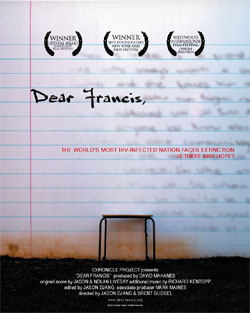
Dear Francis,

Updated 3/6/06 8:00am. Music: I am rocking my Christian Rock Best of Playlist, which includes bands like Switchfoot, Aaron Sprinkle, Poor Old Lu, Brave Saint Saturn, Black Eyed Sceva, and Model Engine. Rock and Roll!!!
Anyway it was brought to my attention that the Handshake link is a bit confusing. Handshake is a song by Black Eyed Sceva written by Jeremy Post. The song is about Jeremy's interaction with a homosexual individual who has AIDS, and dealing with his own homophobia and fear about AIDS. Sorry if that was confusing.


Music: Well I listened to a lot of Hip-Hop this week, lots of Mars Ill and Pigeon John. Today I have listened to Model Engine and Black Eyed Sceva, Foo Fighters, and am curently rocking out to Switchfoot…


Well I am feeling way ahead in my classes and this being Spring Break we are going to blog and then get to some homework later, oh I am a bad man!!!


Well last night a bunch of us went to see Dear Francis, at what has been named “First Friday Films” at Bethlehem Baptist. Their link has also been added to my link section and any of the movies I see there can be accessed from their little blog.

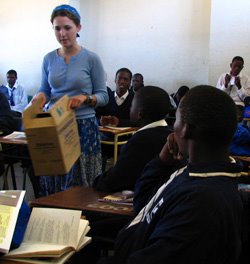
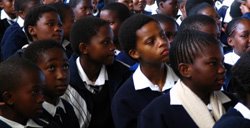
Anyway a little setup about the film. Unlike the last film we saw (Seoul Train) this film had more of a faith-based perspective. It basically chronicles a trip taken by two college students to the country of Swaziland. If you have never heard of Swaziland don’t be totally alarmed I hadn’t either. You can read more by clicking on Swaziland above. The link above will tell you that Swaziland has one of the highest rates of infection of HIV/AIDS in the world. Well that is not exactly true, it actually has the highest rate. In 2003 it is estimated that 38% of the population was infected with the virus and then we heard after the film that the most recent report the number had gone up again to 42%. In adults 25-29 (I think those were the number) it is estimated that 48% of the people are infected. Here are a couple more statistics that I found on the website. Of those between the ages of 15-23, 53% of are HIV positive. Of rural Swazis, 20% of the children are orphans from HIV/AIDS. 88% of 15 year-old boys will be dead by 2015 because of AIDS. Those statistics are breathtaking… If you can, don’t just read over those statistics but take a second and let them sink in… I saw them and have a hard time feeling the whole weight of what that means.


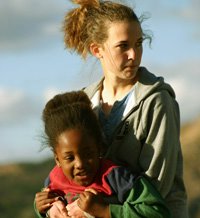
But now lets add some faces to those statistics. The two students were going with an organization that presents abstinence to adolescence as a way of fighting the epidemic, along with encouraging students to get tested for the virus instead of just living without knowing. The two students were naive and under prepared for what they would encounter as apposed to all the rest of college students who set out on short-term mission trips to devastated areas of the world.

What they encounter is that the problem, like most problems around the world and in our lives, is not so cut and dry. Poverty, blending of cultures, fear, apathy, shame, desperation of the oppressed, and the sinfulness of man muddy the waters of the situation. It is compelling to see the discovery of this and the way the two students deal with it.

Kelly (one of the two students) visited an orphanage/foster care center and learned about how deep the problem goes, how often children’s parents will die and the children will exchange sex for food instead of starving. She also learned more about the issue of child abuse and rape in Swaziland, it was amazing to hear how many of the girls had been raped by family members, teachers, or other people that should be protecting them. She heard story after story of the abuse of the powerless by the powerful. She was talking with the director of the orphanage and you can see him break down as he tells stories of abuse and as his voice finally fails him he mumbles “No Justice, No Justice…”

One of the students (Lance) establishes a relationship with a young man (Senzo) who like many of the students could possibly be infected because he has been sexually active and had a father die of an “unknown” illness. Lance is able to convince Senzo to go and be tested for AIDS. It was heart wrenching (my body hurt from the stress) to watch them go in and take the test wait for the results and then receive the news. Unlike Lance (who also takes the test) Senzo has probably a 50/50 chance of having the virus. I will not tell you the results cause you should try and see the movie yourself. Even today as I was driving over to Macalester College to study, I was fighting back tears thinking about Senzo and his bravery, and the drama of his story and his life.

I don’t know stress…


Missy asked me as we were driving home, “So why do you think it is important to watch things like this?” And I added “And what can we do now that we have seen it?” Or something like that (sorry Mis). I will start with what I told her, I do think she knew the answer I was going to give but it was nice of her to ask. Awareness is the first step towards action! As Christians we need to be more aware of what the rest of the world is going through. So that we can tell others, pray and hopefully get involved, whether it is by going over and serving short term or long term or helping and encouraging others to go. More importantly we can pray, and be on our faces before God asking for justice and hope for these people. At DearFrancis.org you can find information on how to help. There are ways to help financially and there continues to be teams that go on similar trips. There are also tons of organizations who do great things in Swaziland and the other countries of Africa to fight the AIDS epidemic.

See this movie, it was very moving. My emotions are easily stirred when I see children in pain and hurting, and in some ways this story hits just a little to close to home as I have seen someone close to me die of this horrible disease… So maybe I am not the best critic, maybe I am to emotionally involved, but I guess I will let you be the judge, “Go, go see this movie…”

I know my posts have been heavy as of late and have been talking about weighty issues but I really think it is important for these things to be on our mind and really effect they way we live our lives. We may not all be able to help financially or go right now but there are things we can do… Again remember the story of the Good Samaritan. My neighbor is anyone I can show mercy to. I love you all very much, thanks for reading, it does mean a lot to me when people say they read what I wrote and sometimes even liked it. I have found great joy in rambling, and am thankful for this stress reliever. And thankful for anyone who would take time to read this...
Godspeed,
Caleb M. Saarela

If you do not own or have never heard “The Beautiful Letdown” by Switchfoot you should check it out. I’m on fire when I think of the carnage of the world...

Handshake
Jeremy Post

Labels: ,

Wednesday, March 01, 2006

Poverty Re-Cap

Music: I am listening to Yellow Second, Roper, and the best of my punk rock, little Green Day right now.

So when I wrote the poverty thing I was pretty tired and so I want to just say a couple things I was thinking about. One, I don't think everyone is called to live in the ghetto and do ministry by living in that community and giving of yourself in that way. Some people are called to live in the suburbs and do ministry that way, I pray that God would not lead me to that, that would suck. But that being said I do think that trying to bring about equality is something that we should all be striving for, not only in the way we "see", or "respect" others, but we should also strive for equality in standard of living and money. It is amazing to me that Jesus has become the poster child for capitalism... It is a strange thing that has happened. Also I am not a communist and please don't tell me I am a communist or anything stupid like that, comments stating such things will most likely be deleted for lack of logic and for just missing the point. I point you to 2 Corinthians 8 look at the hole thing but then specifically look at verse 13, for "fairness". Very interesting. Anyway I think it ends up being he question I presented before, when asking the question of who is my neighbor the answer Jesus provides is that it is anyone we can show mercy to.

I am still learning how to do this better, how do I get to know my neighbors and minister to them; it is socially awkward for a single guy to be involved in the lives of families around him. But I don’t care I want to do better to be involved, do I think we are called to that at the very least, yes, I do, strongly. Are you supposed to pass out money to every beggar or panhandler you see, probably not, but we can be striving for equality and helping people in those situations. If you are a woman should you consistently put yourself in danger or high risk situations? Not if you want to have a lasting long sacrificing lifetime of ministry. We can do some great things by getting involved in people’s lives. There are organizations that can help people in those situations and can help equip you to help them. Another great resource would be #211 (I think, if that is wrong Eileen or Missy help me out). Apparently they are a great source of information when it comes to social services. Like if you called them and said, “I need information about chemical dependency programs for males over the age of 18 they will give you a list. Pretty cool. Anyway I’m done…
Godspeed,
Caleb M. Saarela

“If I had a nickel for every single time
I've tried to classify the populace around me with a word,
or a catchy phrase, I could quit my job for good
and play Nintendo until my fingers ached.

Am I an idiot, too lazy to think twice?
I point the finger, but I can't take my own advice.
I put a name on something and ever since,
I've made an art of building my counterfeit intelligence.

Seemingly to me,
I am straightening a world of cluttered thoughts
and a debris inside my head,
but I think instead of prejudiced
and I give people names to make me feel safe.

How does it feel what does it take to make me understand?
If I could only walk a mile in the shoes of another man.
If I could look out through his eyes
and know what it means to bleed the same red blood that I do.

What is economic status, and tell me what is race?
who decides to Classified taxonomy of grace?
If one man gets less that another is it true,
that he is all that different,
that he is less than you?”
R. Roper

Labels: ,

Sunday, February 26, 2006

Poverty

Sorry this isn't very good. I don't have any good pictures either sorry...

Music: Less than Jake, The Bruce Lee Band, Brave Saint Saturn, Sum 41, The Peacocks, The Lawrence Arms, Johnny Cash, Neil Young, Coldplay, R.E.M., Skank’in Pickle, Mike Park, King Apparatus, Bagheera, The Rudiments, Let’s Go Bowling, Slapstick, Bob Dylan, Roper, Mu330, Relient K, Philmore, Ghoti Hook, Ace Troubleshooter, and Five Iron Frenzy


Well I hope this post finds you well, life here is going good nothing to big, work, study, and seeing friends. Why work tomorrow, oh so sad...

Hey a couple of things. If you get the chance you should see the movie Why We Fight it looks good, very interesting, I saw a long trailer and it doesn’t look like it is one sided but just asks the question how did America get to be the defender of the world and our money and armies get so intertwined.

Also if you live in the Twin Cities on Friday March 3rd at 7:00pm at Bethlehem we are going to watch a documentary about the AIDS crisis in Africa. It is called Dear Francis,. It should be good and then after the documentary they do a phone interview with the filmmaker and then all are invited to The Corner (that's what Mitch and I call the house, we are very clever) to hang out, talk about the movie, or play games and have some fun.

Anyway poverty. In reality I am not the best person to talk about this, Missy, Eileen and Scott have been going to this class for about six months so if you want to talk more about the idea of poverty, race, and redemption they would be the best people to talk to. If you don’t know them ah, well I got nothing for you, so sorry, my bad, my bad…

Well they had a special activity for the class last week; it was called a poverty simulation. It is an exercise where you have to handle the finances for a family of five on a little over minimum wage. You have to make decisions like do we own a car or ride the bus, rent or own, how to handle health care, and child care. There is some chance involved like people get sick or you get a promotion at work, some good some bad, it seemed pretty “realistic” considering it was a simulation. If you ran out of money you could go to social services for help or try and get a new job, or a second job or a third job.

Our family “made it” meaning we had money at the end of the month well we had zero dollars left but we didn’t have less than zero dollars. Hooray for us!!! Anyway we did the right things we decided to own, we bought a car, we didn’t have health insurance, which wasn’t good, but that is the way things go. We had to make some tough choices. Anyway what I noticed was that me made it, but at what cost. Dad was working at night mom was working two jobs one on the weekend or dad was working seven days a week. We lived in a neighborhood where we were “scared” for our safety, or the game told us we were, but we decided to stick it out.

Yes, financially our family survived but we would be in shambles, we would never see each other, we had no recreational activities. I mean how long would we be able to pull that off, we struggled through for a month and a simulation and we were all stressed by then end of it, well I was stressed. The values that most people judge their lives like how do we give the best and most opportunities to our children, how do we let our interpersonal relationships of our family thrive were thrown out the window. The bottom line became the bottom line. Money in the end was all that mattered.

We, like every other group, had to make a trip to social services and “they” (Ben Piper) told us we made to much money. We would have to be making about half of what we were making, somewhere in the neighborhood of $1,500 a month.

Anyway it really put into question the idea that anyone can work themselves out of poverty. It would have taken one big disaster and we would have been sunk. And even the though of doing this for years and years it is easy, very easy to see why these families don’t make it. Why many marriages that are dealing with this end in separation or divorce.

If you have a chance to ever go through a poverty simulation, do it. It will help your worldview; help increase your heart for helping those around you who struggle financially. I don’t think I need to let people know about helping the poor. We need to help more, we need to care and, we need to do more. And we need to have compassion we need to get involved, it will not be and easy road, it will be difficult and you will get hurt and it will be tough but we can start making a difference. It’s time to care...
Sorry this is probably grammatically bad and not very good spelling either.

Godspeed,
Caleb M. Saarela

“Wealth is a Ghetto”
unknown

Labels: ,

Monday, February 20, 2006

Being Green

*Hey I updated this again at 8:00am on 2/22/06. I found a better link to the statement that I referenced in my blog. It is called Climate Change:An Evangelical call to action. I think it would be good to check it out and see what it is saying.

Updated 2/21/06 Around 9:00am and again at 12:30pm. Remember check out the links they will take you to more information and if you click on any of the photos you will be able to see larger versions of them. Peace.

Music: Bob Dylan, The Shins, O' Brother Where art Thou?, Some Alt Rock, Rage Against the Machine, Martin Sexton, Aaron Sprinkle, Reese Roper, Nirvana, ELO, The Foo Fighters, and it is kind of implied that 5Fe is in there too.

Poverty and a Better World

Well it has been another busy weekend of balancing studying, time with friends, and events that affect my life and spirituality. On Saturday night I went to an informational meeting on what they called “Creation Care.” I would call it in simple terms “Being Green for the Glory of God.” On Sunday I joined two of my friends Scott and Missy at their Sunday school class for a poverty exercise. Scott, Missy, and Eileen have been attending this class (Race Redemption and Poverty) for about six months or so and I have never had the motivation to get involved with it but this event has probably solidified it for me and I would like to return and join them for the rest of the year. So there it is a weekend filled with talking and thinking through two huge issues. I will discuss the idea of Being Green first and then come back to the poverty one later in the week or next week perhaps.

My interest about being more “Green” started probably right after I got back from China. It wasn’t a huge interest but it has grown on me the more I have read and looked into the subject. These ideas do not come out of an attempt to “save the earth” for that end but to care for it to give glory to God. Nowhere in this post will you hear me say we should worship the earth or mother earth. All of the ideas flow from the idea that the creator is worthy of praise, and caring for the planet is a way of caring for other human beings. I hope in this little post you will see why I think being green should be part of our Christian lives.

Some time last week some leaders of the evangelical community released a statement on climate change. It is not a huge thing but the evangelical community has been eerily silent on environmental issues over the last 20 years. So much so that when this statement came out many news sources took note and it was the topic of much conversation.

What type of conversation? Well a lot of them have been about how some of the “big name” evangelicals are not part of the group who signed this. Some examples are James Dobson, Chuck Coleson, and Franklin Graham. NPR had a little thing on it and it gives some of the reasons that some evangelical leaders did not sign the statement. Here is part of their argument as stated in the NPR article.

“Land, along with Colson and Dobson, wrote a letter opposing the Evangelical Call to Action because, he says, there is not consensus about climate change among evangelicals. Land says the Bible makes clear that God expects human beings to take care of the earth. But "human beings come first in God's created order," he adds. "And that primacy must be given to human beings and for human betterment. If that means that other parts of nature take a back seat, well, then they take a back seat,

Land argues that slowing economic growth and development by overly strict environmental controls will harm human beings.”

To say I was disappointed to read this was a bit of an understatement. Especially the end of it, remember people are important but not as important as economic growth, no new taxes!!! I don’t know that just sounds like such old political rhetoric. But the statement was a great start. I applaud the people who did sign it.

Here are a couple verses that point to the idea of being mindful of creation. Genesis 1:1 God created the heaven and the earth. Genesis 1:26-31 God give the earth to man and entrusts it’s care to him. Just like anything else God has entrusted, it should not be wasted. Psalm 19:1-4 The heavens declare the glory of the Lord. The earth was created to display God’s glory we should value that display. There are tons of other verses like this that talk about praising God because of the wonders of his creation. Romans 8:18-25 This verse is arguably the most interesting. In verse 21 the earth “will be set free from its bondage to decay and obtain freedom of the glory of the children of God.” Creation will be redeemed in a similar way to the children of God, it groans in pains of childbirth. I always was under the assumption that the earth would be destroyed, like we would sit up in heaven and then God would blow the thing up and we would cheer and oh and ah it would be kind of like the fourth of July. But these verses make it sound more like creation, the earth, will be set right, or renewed to how it was intended to be. There are many more I am just drawing a couple little scratches in what is a beautiful and large picture.

I think there are two problems. The first is that in the evangelical community being Green is considered liberal, and being liberal is considered wrong or even sinful. So being Green is considered wrong or even sinful. Did everyone catch that logical process A=B, B=C, and so A=C. Hooray for college… Now I doubt that anyone actually thinks that. I don’t think the Christian community actually thinks being Green is sinful but there is a stigma attached to it and I think it has something to do with A=C. So maybe we think I want to do more to care for this world God created but then we are afraid that we will be labeled as liberal.

The issue is that these “liberals” are putting us to shame when it comes to caring for God’s creation. They look around and wonder where are the people of God? Why don’t they say something? Why don’t they do something? And I think they are right to question us.

Another problem is that we do not associate environmental issues with people’s lives. In most of the rest of the world people see the connection very clearly. In Kenya and most other places in the world they see a direct connection to conserving the earth and people living. If we deforest the land the land will erode and we will not be able to farm the land and we will die. Most of the rest of the world sees the direct connection. I use Kenya as an example, I was talking to lady who had been there in the mid-eighties and then again last year. She said that the change was visably noticiable. In about twenty years things had gotten so bad that recoving is going to be an incredible up hill battle. In America this has not pushed our comfort level yet. When we waste water, or use up our natural resources, don’t recycle, or destroy our land people don’t die. It may cost us a little more money or be a little inconvenient but no one in our lives dies. In Matthew 25:31-46 Jesus tells about the judgement and is saying when you the least of these you did this for me. Being Green is something we can do for the least of these, even though we are not affected directly yet. In the parable of the Good Samaritan Jesus asks the lawyer “Which of these three, do you think, proved to be a neighbor to the man who fell among the robbers?” I guess I want to know who do we consider to be our neighbor? It is anyone we can show mercy to, and a way we can show mercy is by being more environmentally minded.

So what can we do? Well that is a tricky one, I will be honest, we can’t change the world but we can do our part, I think. One thing I know we can do is to start seeing the connection between protecting God’s creation and protecting people. That is where I think Dobson, Coleson, and Land have missed the point they are not thinking big enough, why I don’t know. But lets love our neighbors by being more conscious of what we do to the environment.

Here are some other things, I think most people know them but there is a small list. The NDRC has some good tips or ideas that you can look at but here some others too. Recycle, you can recycle more than you probably know. Drive Less, Drive Smart,don’t drive to work by yourself everyday, use mass transit, or use a bike. Now I know that here in Minneapolis this is not possible all the time, the Twin Cities are very spread out and it is freezing outside for about half the year but again lets start small and see what we can do. I need to start riding my bike to work again; I have let the cold get the better of me. But you know we can do things like getting rides together with coworkers or friends, again it can be a little more inconvenient but it’s a start. Water conservation, turn off the water when you brush your teeth take shorter showers. I have said it before; I think the next world war will be over water not oil. Energy Conversation, not only is this good for the environment but for your budget.

Those are just a couple little things but find out for yourself don’t take my word for it.

Again I think it is so important for us to make the connection between our actions and the way it affects people around the world. I know we are busy and have stresses to deal with here infront of us and it is hard to think about people all around the world, but when it comes right down to it, I think we need to.
Godspeed,
Caleb M. Saarela

How Great Thou Art

Labels: ,

Monday, January 16, 2006

Random Monday Rants...

All right this is going to be a ton of little different things.
Happy Martin Luther King Jr. Day!
Here is a link to Dr. King’s I have a dream speech.


Yesterday Nathan, Mitch, Brent and myself went up to Bethlehem to watch the documentary “Citizen King” about Dr. King’s life from 1963 to 1968. It was really good, a little mix of information and emotions. If you ever get the chance you should check it out.

Yesterday at church we sang the song “I’m on the Battlefield” arr. by Ron Porter it was a nice song. What I really liked was Pastor Kenny Stokes prayer afterward. I liked how he described becoming a Christian is like being born onto a battlefield. It’s just an interesting way of looking at it. It reminded me of the scene in the movie “12 Monkeys” when Bruce Willis’s character goes back in time and ends up in World War I. He is naked and confused and needs the help of others. Like every analogy it kind of starts to break down but remember when you first came to faith or had that experience that put you back on the path with the Lord, how crazy excited were you? You charged the line, absolutely fearless. As time goes on you need to regroup, refocus, retool, sharpen your sword, and all of the other great war analogies. Anyway it made me think.

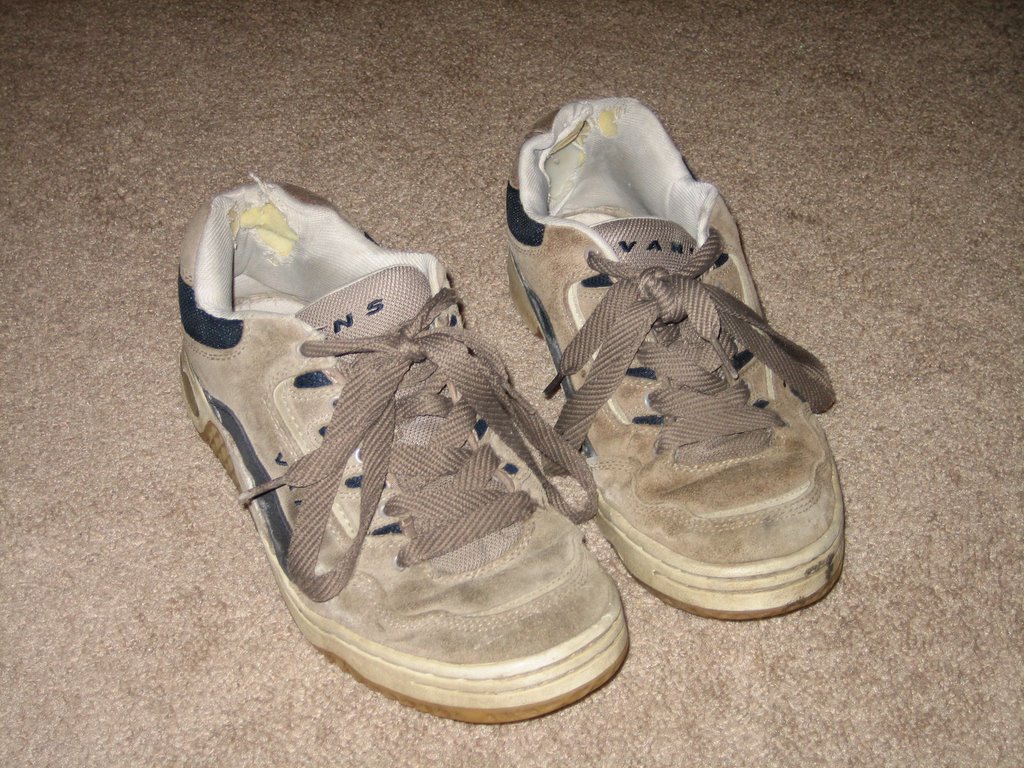
Next, my favorite pair of shoes have finally hit their end. It’s over they have been the best shoes for the last three years. I got them two days after I got back from China. I will swear by Vans they are the best, super durable. So I wrote a poem about them. It’s funny and not meant to be taken seriously at all.


My Vans
My skateboard shoes are dying
Holes on all sides explode
They have never seen a skateboard flying
Pops and squeaks along the road

Brown with blue, spots of tan
Lace drag, seams thread barren
Feet slide in and I’m the man
I walk by the chicks are stare’en

I’ve worn them everywhere
In every situation, on my feet
Through horror, trial and care
Now their end they face defeat

Their task completed the quest is over
The insides have been laid to waste
I will see them like my brother
Forty dollars later they will be replaced
Caleb M. Saarela


Goodbye my shoes, oh so sad…

Next, I want to write one little thing about the article on Jonathan Christman’s blog. I believe that there is risk in every relationship. EVERY relationship! It is the risk that makes the relationships in our life worthwhile. If you never take a risk in any relationship you will never get to know anyone intimately. I think about the relationships that have meant the most in my life they are with people who have asked me the hard questions and who I have shared my soul with. I will use my relationship with my roommate Mitch as an example. I have only known Mitch a year and we have lived together for five months. We have gotten to know each other pretty well, we have had the chance to share very personal things with each other, we lead a Bible study together, and we have many of the same friends in our church communities. The risk we have taken is that if we would have a falling out it would affect so many aspects of our lives. I actually think we could pull off the living together just fine. People live together all the time and never interact it isn’t fun but it is doable, but it would have an affect on our friends, Bible study, and we would both lose the joy of the relationship. We have made a decision and said this relationship is worth the risk.
I feel like many people try and create risk free relationships and I just don’t think they exist on a deep level. I am not promoting recklessness but we all take calculated risks in relationships and I think that is a good thing. I have a glued hand analogy but this is getting long so that will have to wait for another time.

One more thing…

Rock N’ Roll
I am such a dork

Godspeed,
Caleb M. Saarela

Labels: , ,

Saturday, November 19, 2005

Why I will buy nothing (updated 12/19/05)


So because of some heat I have taken for my comments supporting "Buy Nothing Day" (BND) and the ideals behind it I have decided to write an explanation of why I do support this holiday. Not just because of the secular ideals behind it (I am not sure if that is the right wording but I mean that even if I was not a Christian I would support this idea) but also why my faith in Jesus has compelled me to support it. After I wrote this post I realized that it is really long but I hope it is enlightening and challenging and worth reading I think it is one of the best things I have ever written and comes from my heart. The grammar and spelling might be bad but I felt the need to get it up and out now and fix parts later.

American (Western) consumption is out of control. We are killing the earth and the people who will live on it in the future. American’s greed has distorted the word “need” and has lead us to be a culture that consumes unmercifully. If you want to learn more about how this is happening look, you can find the information anywhere (find out when South Africa will run out of water, that one will scare the crap out of you (google south Africa water crisis that’s a start)). So the day after thanksgiving is the pinnacle of Western consumption and it is a day to stand up and say I think this is bad and we should do something about it. Because of those reasons alone I support this holiday but that is not where it ends for me and now my faith takes over and pushes me further.

Now I know many people will say “O.K. I see not wanting to hurt the people who live on the earth but the earth itself doesn’t matter.” Yes God will destroy the earth one day and so if it looks a little dented who cares. Well I believe God cares, at least a little. The world was created out of an overflow of joy and to display His glory. So I feel we should honor the earth, clearly not as much as we honor God, God’s Word, or people but to say it is something that is important to us is not wrong.

Now I think those are great reasons to enjoy BND but I think there are even more. My major reason for celebrating this day is: “I see this day as a great way to protest or make a statement about how we as Americans spend our money.” This day above all others makes the most sense to me. It is the day where American consumerism is not only seen as O.K. it is embraced and glorified. I am not saying anytime we buy something it is bad. I buy things, I just see this day as a day to stand up and set myself apart with an extreme statement that hopefully represents how I live my life and spend my money the other 364 days of the year. I would love to see other Christians stand up and do the same, but in no way do I think they are doing anything wrong by going out and shopping that day, I think when pushed this at first that is what I might have implied and that was wrong of me to do, BUT I think I am really on the right track with the stuff that follows and if you think I’m way off I would love to discus it more because I will be making some strong statements. To stand up and say we have a problem and it’s getting worse.

So the rest of this is basically why I feel we who claim to be Christians need to set ourselves apart from American culture when it comes to our spending habits.
Recently at a church in Minnesota a sermon was given saying “It is O.K. for a Christian to own a Lexus.” I disagree with this idea; I think a Christian should not own a Lexus or a million dollar home. Most people’s first response, “You are judging them.” No, I see their actions and am making a comment about what I see and how it affects their relationship with God. I want what is best for them and I feel they are missing a better blessing form God by using their money in a way that does not bring Him glory.

I believe Jesus was very specific how we should spend our money he did not avoid the issue I think Jesus has called us to a higher standard of living (what a play on words someone buy me a hotdog). Jesus talks about money more than anyone in the Bible so we have a great spot to start from and a great high priest who has not been silent on the subject. I think I could spend weeks looking at every different passage but to keep it a little shorter I would like to just briefly look at a couple of these and let you look at more if you feel the need to. I would like to establish the ideas that 1. Love of money puts us at odds with God. 2. How we spend our money reflects what we find most valuable and ultimately trust money, worldly possessions, or God. 3. It is not how much we give but how we give. 4. God desires for us to live simple lives for His glory and our joy.

1. Love of money puts us at odds with God and diminishes how much we value Him. Matthew 6:24 (ESV) ”24 No one can serve two masters, for either he will hate the one and love the other, or he will be devoted to the one and despise the other. You cannot serve God and money.“ So that is a good place to start you cannot serve money and God. The desire for money will be at war with the desire for God in your heart. Mark 10:23-25 says, “23 And Jesus looked around and said to his disciples, "How difficult it will be for those who have wealth to enter the kingdom of God!" 24 And the disciples were amazed at his words. But Jesus said to them again, "Children, how difficult it is to enter the kingdom of God! 25 It is easier for a camel to go through the eye of a needle than for a rich person to enter the kingdom of God." Money will make it difficult for some to enter God’s kingdom. Some will find money more desirable then God.

2. How we spend our money reflects what we find most valuable and ultimately trust money, worldly possessions, or God. Matthew 6:19-21 “19 Do not lay up for yourselves treasures on earth, where moth and rust destroy and where thieves break in and steal, 20 but lay up for yourselves treasures in heaven, where neither moth nor rust destroys and where thieves do not break in and steal. 21 For where your treasure is, there your heart will be also.” The things we own and do are a reflection of what we desire and what we see as supremely valuable. There are other verses that would support the idea that when we trust anything but God it is sin.

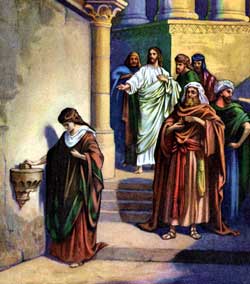
3. It is not how much we give but how we give. Luke 21:1-4 “1 Jesus looked up and saw the rich putting their gifts into the offering box, 2 and he saw a poor widow put in two small copper coins. 3 And he said, "Truly, I tell you, this poor widow has put in more than all of them. 4 For they all contributed out of their abundance, but she out of her poverty put in all she had to live on." Jesus has no concern with how much the widow gave the amount is not important it is the heart behind it. God still loves the giving heart of the rich but the better blessing is bestowed upon the widow.

4. God desires for us to live simple lives for His glory and our joy. Luke 12:32-34 says, 32"Fear not, little flock, for it is your Father's good pleasure to give you the kingdom. 33Sell your possessions, and give to the needy. Provide yourselves with moneybags that do not grow old, with a treasure in the heavens that does not fail, where no thief approaches and no moth destroys. 34For where your treasure is, there will your heart be also. Here is what John Piper says about these verses in a message given on December 14, 1997.
“Focus for a moment on the words, "Sell your possessions." Who was he talking to? Verse 22 gives the answer: "Then Jesus said to his disciples." Now these people were by and large not wealthy. They didn't have a lot of possessions. But still he says, "Sell your possessions." He doesn't say how many possessions to sell. To the rich ruler in Luke 18:22 Jesus said, "Sell everything you have and give to the poor, and you will have treasure in heaven. Then come, follow me." Sell all your possessions. When Zaccheus met Jesus, he said (Luke 19:8), "Look, Lord! Here and now I give half of my possessions to the poor, and if I have cheated anybody out of anything, I will pay back four times the amount." So Zaccheus gave fifty percent of his possessions. In Acts 4:37 it says, "Barnabas sold a field he owned and brought the money and put it at the apostles' feet." So he sold at least one field.
So the Bible doesn't tell us how many possessions to sell. But why does it say sell possessions at all? Why? Giving alms - using your money to show love for those without the necessities of life and without the gospel (the necessity of eternal life) - is so important that if you don't have any liquid assets to give, you should sell something so you can give. But now think what this means in context. These disciples are not cash-poor rich people whose money is all tied up in bonds or real estate. Most people like that do, in fact, usually have fairly deep savings. But Jesus didn't say, "Take some of your savings and give alms." He said, "Sell something, and give alms." Why? The simplest assumption is that these folks lived close enough to the edge that they did not have cash to give and had to sell something so they could give. And Jesus wanted his people to move toward simplification, not accumulation.
So what's the point? The point is that there is a powerful impulse in the Christian life toward simplicity rather than accumulation. The impulse comes from treasuring God as Shepherd and Father and King more than we treasure all our possessions. And the impulse is a strong impulse for two reasons. One is that Jesus said, "How hard it is for the rich (literally: those who have things) to enter the kingdom of God!" (Luke 18:24). In Luke 8:14 Jesus said that riches "choke" the word of God. But we want to enter the kingdom vastly more than we want things. And we don't want the word of God choked in our lives. So there is a strong impulse to simplify rather than accumulate. The other reason is that we want the preciousness of God to be manifest to the world. And Jesus tells us here that selling things and giving alms is one way to show that God is real and precious as Shepherd, Father and King.
So the second point is that trusting God as Shepherd, Father and King carries a strong impulse toward simplicity rather than accumulation. And this brings worship out from the inner, hidden place of the heart into more visible actions for the glory of God.”

I agree one hundred percent and believe in a simple lifestyle.

Now back to the Lexus and the American church. Do we live our life like that? Does someone who owns a Lexus or a million dollar home live like that? I just don’t think they do. There possessions speak of what they treasure. They may give away loads of money and then say well this is left over so I’ll buy some extravagant things for myself, and while they may not be sinning they are certainly missing out on a blessing God desires to give them.

So those are big things that's easy, what about the small things? Is it ever appropriate to buy a new car or something that we want? When do we cross the line of simple to extravagant? How do we make judgments about what to buy? Well it's a fine line we must walk. We should think hard and pray hard about every decision I guess I would ask this question as a guideline though. How often do we as a culture and individuals error on the side of being too simple? It is pretty rare and I know there is Christian liberties but I would hate to see us fight for the liberties of the rich while the hungry, needy, and lost of the world continue to fight for food, water, shelter, and even more imporatantly while the lost of the world continue to wander in the dark.

I hope I have not bitten off more than I can chew here. First off I’m the chief sinner, I still buy things I don’t need, I am working on it and praying God would refine my heart in this area, so do not think I’m saying I’m with out guilt.

In the end I ask the question about November 25th, 2005. Where do you want to stand, is it in line to get ten percent off on mittens? Or do you want to stand up and say America, American Christians we have lost our way let us value and trust Christ above everything else! Here is where we draw the line. Here is where the revolution starts…
Godspeed,
Caleb M. Saarela

P.S. Usually I have "cool" lyrics here but this is too long if you are really interested go read the song Vultures below.

Labels: , ,

Wednesday, November 16, 2005

Buy Nothing Day


Hey November 25th the day after Thanksgiving. What is commonly known as "green Friday." Some people have created a new holiday called "buy nothing day." It is a chance to set our selves apart from the monster that is American consumerism. So join me and don't buy anything. I put a link to a good website with information about the day. Don't be sucked into American consumerism.
Godspeed,
Caleb M. Saarela

"Watching Mrs. Brady prime the brand new Kenmore washer
see the brilliant gleam of the automatic tooth flosser
Beautiful the china, what a lovely cup and saucer
yeah I saw your Rolex, but I think its an impostor
Wave to the pretty ladies
with your brand new hairpiece, baby
Ahh, the smell of cash, its good to be alive
Im going to spend some dough like its 1985
Rip the tags off mattresses
youll buy more anyway
Is the paint on that SUV
some brand new type of gray?

Chorus:
Believe in anything
Vultures circling
Open, swallow, you're so hollow
Yeah.

My teeth are getting yellow from the mocha I just drank
I need to bleach them out, but my breath will still be rank
Did you you see the new computers,
arent they oh so obsolete?
And that shade of black you wear,
its so Tuesday of last week
You need a better life
Have you tried another wife?
I used to be an amateur but now Im going pro
It once was Mile High but you sold it to Invesco
The empire grows
you can see its massive span
beneath the golden arches
somewhere in Japan.

And the vultures circle
theyve paved the way
Theyve bit and clawed their path
to top floors in L.A.
And beneath the brazen windows
you can hear the sound
they say the word on the street
is somethings going down?
When the revolution comes."
R. Roper

Labels: , ,